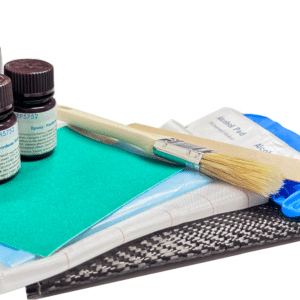
Carbon Fibre Skinning Kit

Entry-level carbon fibre skinning kit for users wanting to give a carbon fibre finish to a part and to increase part strength and stiffness. 

High-quality materials suitable for DIY enthusiasts and professionals alike.

Send to a Friend

Description

Carbon fibre skinning involves the application of carbon fibre to the outer layer of a part. 

Whilst skinning can increase the strength and durability of a part, the primary purpose is cosmetic and is intended to give a carbon fibre appearance, without the added cost. 

Skinning is used to provide excellent results for a range of applications, from vehicle and motorcycle parts to hobby and recreational products.

Parts amenable to skinning may be made from wood, plastic and other substrates.

This kit is intended for both DIY enthusiasts and professionals alike.
Applications

Carbon fibre skinning has 3 main applications:

+ Give the appearance of carbon fibre without complex moulding practices
+ Provide additional reinforcement
+ Repair or refurbish an existing carbon fibre part or piece of equipment

It is most commonly used in the automotive sectors on vehicle interiors (e.g. dashboard panels, inner door panels, sound systems, etc.) as well as external components (skirting, hoods, bonnets, wing mirrors, etc.). It can also be used for motorbike panels, mudguards, etc., as well as many other surfaces. 

Downloads

FAQs

Q. What is carbon fibre skinning?

A. Carbon fibre skinning is a cosmetic procedure designed to give a carbon fibre finish. It also improves the mechanical properties of the part, such as strength and stiffness. 

Correct laminating procedures should make the part nearly indistinguishable from pure carbon fibre parts.

Q. Does carbon fibre skinning add strength?

A. Yes, when performed correctly, carbon fibre skinning will add strength and stiffness to the part. The extent of the strength added will depend on the laminate design. Resin Library Carbon Fibre Skinning Kits are designed to add additional strength without excessive weight.

Q. Does carbon fibre skinning add weight?

A. Yes, weight is increased in proportion to the amount of carbon fibre added.

Q. What carbon fibre fabric is used?

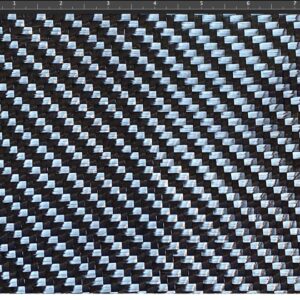
A. 210 gram 2/2 twill 3k carbon fibre fabric is used.

Q. Is a topcoat applied to an object skinned with carbon fibre?

A. The primary goal is to make the object appear to be made from carbon fibre. Applying a pigmented topcoat would disguise that. However, if the part is to be made transparent and will be for outdoor activities, the. A UV-resistant topcoat is recommended.

Q. How many layers of carbon fibre are required for skinning?

A. Carbon fibre skinning is a cosmetic process, so a single layer of carbon fibre will suffice.

Getting Started

Skinning a part of a piece of equipment with carbon fibre involves multiple steps. In short, this involves the application of a coat (or skin) of carbon fibre fabric and epoxy resin. This ‘skin’ is bespoke to each part and is intended to bond permanently to it whilst presenting a glossy, carbon finish with the strength and stiffness properties of carbon fibre. 

Every part is ‘skinned’ by hand and therefore the materials and the extent of the work are variable. To accommodate this, Resin Library offers a range of carbon fibre skinning kit sizes.

What does the skinning process involve?

Parts and equipment to be skinned are scuffed and cleaned. Thereafter, a thin layer of resin is applied. 2/2 twill carbon fibre fabric is then cut and applied to this part whilst the resin is slightly sticky. Epoxy resin is then applied to the carbon fibre to saturate it. Thereafter, the resin is allowed to cure. 

Sandpaper is then used to roughen the surface, prior to it being solvent-cleaned and coated in a thin layer of resin. After another cure, the part is then polished and ready for use.