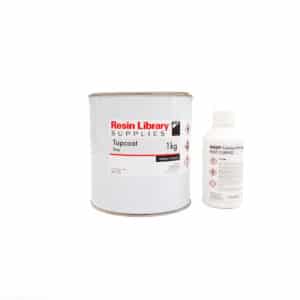
Epoxy Laminating Resin

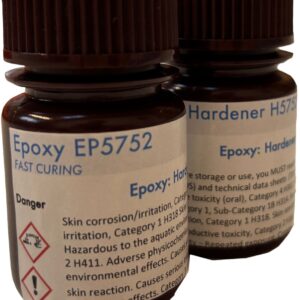
Epoxy 5752-105 Laminating System for hand-layup. Combines both epoxy resin and a fast-cure hardener. Economical system offering fast wetting, and ease of use. Suitable for ambient temperature curing. Generates mechanically strong composites with high performance. Compatible with carbon fibre and other reinforcement materials.

Ideal for producing composites used in motorsport, marine and other industries.

Sold as 1 and 5 kg quantities.

This product is currently out of stock and unavailable.

Send to a Friend

Description

This epoxy is designed for general laminating, wet layup-up and the construction of carbon fibre and glass fibre composites. Suitable for hand laminating. Does not require autoclaving.

Key features include:

+ High mechanical strength 

+ Compatible with carbon fibre and glass fibre fabrics and fillers

+ Can be filled with mineral or metal materials
Applications

Standard Applications

Resin Library Epoxy Laminating Resin is a high-performance laminating resin.

Designed for use in wet-lay or vacuum-bagged procedures with suitable reinforcement.

Reinforcement

It demonstrates excellent wettability when used in conjunction with carbon fibre, Kevlar (aramid fibre) and selective glass fibre reinforcements. This reduces the chance of bubble formation.

Note: if you wish to have reinforcement as part of a kit, please see our range of reinforcements or our epoxy-based kits. 

Substrate Application

Epoxy resin bonds well to dry surfaces with a degree of roughness. Classic examples include existing carbon fibre and fibreglass structures made from epoxy resin.

Correct Usage

Inexperienced users should follow instructions for best practices.

Laminating techniques usually involve mixing epoxy resin with a suitable hardener. This procedure requires a degree of skill and understanding in order to create laminates that both adhere strong and are structurally sound.

Best results necessitate correct hardner-resin ratios, prompt application using clean tools to ensure adequate coverage and to drive out excess air, as well as correct resin-to-reinforcement rations should they be required. Work and curing should be performed under clean and dry conditions. Contamination from moisture or debris can impact the quality of any cured material.

More detail can be found below, in the Technical Data Sheet (TDS) or in our instructional guide. Resin Library also supplies step-by-step guides for various epoxy resin applications.

Key Processing Information

  • Suitability: professional, DIY and hobby usage
    • Odour: epoxy has a strong smell
    • Safety Precautions:
      • Wear PPE: gloves, goggles and a mask unless working in a well-ventilated area.
      • Read the MSDS in advance, plan ahead.
      • Consult the MSDS sheet for PPE and safety precautions.
      • Exotherm (Over-Heating)
      • Polyester resin curing is exothermic; it will generate heat as it cures. Work in small, manageable quantities. Mixed resin is dangerous. Do not leave it unattended.
    • Users should also be aware of epoxy resin hazards. Users should also be aware of how epoxy resin is controlled under COSHH regulations.
  • Recommended working conditions: dry, ambient conditions (15 – 25 oC)
  • Can be used outside of the aforementioned temperature range but pot life, cure time and catalyst requirements will be affected.
  • Lower operating temperatures are achievable but require modification to catalyst type. Discuss with a Resin Library advisor.

Quantities

Mix 2 parts of epoxy resin with 1 part of hardener. Mix the two components thoroughly as specified in the TDS. Impregnate each layer of fabric as it is laid up to construct the laminate.

Please note that when dispensing epoxy resin, 1 kg does not equal 1 litre; the density should be accounted for.

Mixing

  • Prepare workable quantities of resin – be aware that excessive amounts of epoxy resin are harder to manage.
  • When adding hardener, use a dispenser to ensure correct amounts and carefully add to the resin. Mix thoroughly using a clean paddle for 1 – 2 minutes. Take care to avoid introducing air into the mixture.

Application

  • Apply resin by brush for small or complex areas or a laminating roller for larger areas. Do not use a foam roller as this will dissolve in the resin.
  • Allow 8 – 14 hours depending on conditions for a full cure.

Note: cure rates depend on hardener type and ambient temperatures.

Storage & Pot-Life

  • Unopened shelf life of 6 months
  • Store at 2 – 20 oC in a clean, dark environment.
  • Once opened, immediately seal after use. Use within 3 months
  • The pot life at 23°C is 20 minutes. Be sure to use your resin before this time.

Quality

Manufactured in an ISO9001-compliant environment and used by leading fibreglass roofing brands, Resin Library’s epoxy resin is a high-performance ingredient in many composite applications.

Downloads

TDS EP 5752

TDS EP 5752 – H105

SDS H5752

SDS H105

FAQs

Q. Is this epoxy laminating resin easy to work with?

Yes, this it has good wettability, a degree of viscosity which makes it easier to keep the resin in the reinforcement. Different hardeners are available if required to enable users to choose different cure speeds. 

Yes, it can be used via hand laminating techniques. It is an ambient-curing resin system which does not require autoclave-based curing. Curing via a stepwise process is however recommended to gain full high-temperature properties. Please consult the technical data sheet (TDS) for more information.

Q. Can this epoxy resin be used with glass fibre reinforcement?

A. Yes, but with certain types. Generally, any stitched or woven glass fibre will be compatible. If chopped strand matting (CSM) is used then it should be powder-bound. 

Q. What are the differences between polyester and epoxy resins?

A. Polyester resins are inexpensive and easy to use. They cure quickly (1 – 2 hours) and are generally used with glass fibre reinforcements and are strong, with a high strength-to-weight ratio and degree of flexibility. However, they are not as strong as epoxy resins and tend to shrink by a few percent.

Epoxy resins offer improved physical and mechanical performance, with higher strength-to-weight ratios and greater impact and shock resistance than polyester resins. This is at the expense of increased cost and slower curing rates (8 – 14 hours)). A higher skill level is typically required too.

Q. What types of work can be performed with this epoxy resin?

A. This general epoxy laminating resin is suitable for a range of applications. Some of these include, but are not limited to:

+ Carbon fibre repairs
+ Skinning
+ Moulds
+ General laminating

Getting Started

This is a general-purpose, high-performing epoxy resin suitable for hand-laminating applications. 

In conjunction with reinforcements like carbon fibre, it can be used to create high-quality composite parts. This makes it ideal for a range of applications, from race car components to marine structures and beyond. 

Processing Techniques

Process Suitability
Wet Lay Up  + +
Resin Infusion
RTM
Filament Winding
Pultrusion
Brush / Roller  + +

Application – Reinforcements & Coatings

Application Suitability
Carbon Fibre  + +
Cosmetic Carbon Fibre  + +
Glass Fibre  + +
Structural  +
Coatings
Adhesives  +

Properties

Properties Suitability
General Purpose  +
Low Temperature Cure  + +
Fast Cure  + +
Slow Cure
Surface Finish
Corrosion Resistance  +
Chemical Resistance  +
High-Temperature Resistance
Adhesion  +

The following section provides an overview on how to prepare and use epoxy laminating resin. For more detailed technical information, please consult the Technical Data Sheets (TDS) and User Guides found in the ‘Downloads’ tab.

Dispensing & Mixing

Careful measuring of epoxy resin and hardener is required to accurately ensure the correct resin-hardener ratio is reached and the desired quantity is prepared. When working by hand, epoxy and hardener can be measured via volumetric- or weight-based measuring tools.

Do not dispense into glass or foam; both vessels risk an exothermic reaction. Paper or plastic are preferred. Once added in a combined mixture, carefully mix using a clean mixing stick. The aim is to achieve a uniform consistency. Take care to ensure the corners of the vessel are mixed as much as the main body as this will ensure a full mix. 

Promptly tansfer the mixture to a roller pan or equivalent to maximise working time and workability. Larger quantities may require a pumping system. If including fillers or pigments, ensure the same principle of mixing is applied prior to transfer. 

Note: the combination of epoxy resin and hardener will start a chemical reaction. This will transition the mixture from a viscous liquid state to a solid one. The reaction is exothermic and will generate heat. If this reaction becomes uncontrolled, vacate the area and ideally move it away to a well-ventilated area, notifying surrounding persons. Do not dispose of the mixture until it has cooled. Please familiarise yourself with the Technica Data Sheets (TDS) for respective materials. 

Pot Life

Pot life refers to the allocated time a resin-hardener mixture will remain in a liquid state at a specific temperature. It is intended to provide a relative comparison between the reaction rate and the cure speed across multiple resin-hardener combination. It does not equate to a specific real-world value and is based upon laboratory testing. 

Shelf Life

The shelf life of unmixed epoxy resin and hardener formulations long relative to other resins like polyester. A 12 month shelf life is assigned to Resin Library epoxy laminating resins. Storage at a temperature range of 10 – 15°C is recommended for best results. 

Mixing

After dispensing the correct amounts of PRO-SET® resin and hardener for your application, it is important to mix the two thoroughly using the right equipment.

Laminating

The laminating step is the most critical part of the process. It involves the ‘wetting out’ of reinforcement fabric with the epoxy-hardener resin mix. The simplest method utilises a hand lay-up method which utilises brushes and aluminium rollers to carefully drive resin into the fabric (e.g. carbon fibre or glass fibre), thereby replacing air pockets with resin and ensuring a desirable resin composition. Hand laminating is the most accessible, easiest to do and requires minimal expenditure. 

Note: it is advisable to always select an appropriate reinforcement to ensure compatibility with the resin. 

Curing 

The epoxy resin curing process can be split into three stages:

1. Liquid State: also referred to as the ‘open time’ or ‘wet lay-up time’. This is the point of the cure where the epoxy is liquid and workable. Once this stage has ended, the ability to laminate is not possible. 

2. Gel State: initial cure whereby the resin is in a gel-like state and is highly viscous and is undergoing curing. The resin will be partially cured but too soft to sand. If required, post-cure heating may being once an initial cure state has been reached.

3. Solid State: final cured state where resin is in a solid state. A full cure may take several days or weeks to complete. 

The speed of reaction, length of phases and total cure times are affected by the hardener selected and the ambeint temperature.

Factors Affecting Cure Time

There are multiple factors which affect the cure time. These can be adjusted and tailored in order to crease a desired working time. 

+ Hardener

The type of resin hardener added will dictate the rate of curing. Fast through to slow hardeners exist and are selected based upon the desired working times. Slower hardeners are preferred for beginners or largers, more complex parts, whilst faster hardners are preferred for simpler parts or those requiring a rapid cure, such as that included in carbon fibre repair kits. 

+ Mixing Quantity

The resin-hardener mixture will create an exothermic reaction – one which produces heat. Larger amounts of epoxy will create more heat and create shorter working and cure times. Smaller quantities of epoxy will create less heat and have longer working/cure times. This means that thinner layers of epoxy-reinforcement ply will take longer to cure than thicker ones.

+ Mixing Vessel Shape

The generation of heat from the epoxy system can be mitigated by pouring it into a vessel with a larger surface area, such as a roller pan. This will extend the working time and make working with the system less time-intensive and safer. 

+ Temperature

Heat can be applied to or removed from the epoxy to shorten or extend working and cure times. This can be especially beneficial when assembling very large or complicated components that require maximum working time and minimum final cure time. Be sure you fully understand the effects of heating and cooling on the mould before implementing these techniques.

Vacuum Bag Laminating 

Vacuum bagging applies pressure evenly over the laminate. It promotes a more dense eliminate by better controlling the resin-reinforcement ratio. It also means that voids (air pockets) inside the laminate are less likely to form. 

In short, the optimum resin-fibre ratio typically ranges from 30 – 50 %; lower ratios = lighter composites and higher ratios = heavier composites but with greater moisture-repelling properties. Texting is required in advance to determine the best working conditions. 

Using a Release Fabric 

If an additional coating is going to be applied on top of the laminate, a release fabric can be placed over the surface. This release fabric  (e.g. peel ply) can be placed over the lay-up. Once peeled from the surface, the release fabric will leave a fine texture. The use of a release fabric will eliminate the need to wash and sand the laminate surface in advance of any future coating or bonding. 

Once the laminate reaches the initial cure state, the and the peel ply is removed, the laminate will be ready for coating without additional preparation. 

Upon release, the peel ply will create a finely textured surface that is free from contaminants.

When building a laminate, use consecutive lay-ups across a period of several days. Apply the peel ply following lay-up at the end of the day and then remove it at the beginning of the next day. Upon completion, built-up layers of laminate can be fully cured together.

Note: please check the compatibility of the release fabric with the epoxy laminating resin. Not all release fabrics are compatible.

Downloads

Technical Data Sheets

TDS EP 5752

TDS EP 5752 – H105

Safety Data Sheets

SDS H5752

SDS H105