
GRP Primer

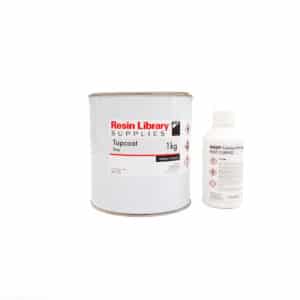
GRP Primer for fibreglass laminating.

Moisture-curing primer designed to maximise bonding between fibreglass and base substrates.

Apply approx. 0.25 – 0.5 kg primer coverage per square meter.

Price range: £15.00 through £272.87

Send to a Friend

Description

GRP Primer is designed to improve adhesion between fibreglass and an underlying substrate.

Also acts as a moisture-blocking barrier, preventing external contaminants from contacting the fibreglass layer if they penetrate the substrate.

GRP Primer can be applied using a brush, laminating roller or via spraying.
Applications

Direct application of fibreglass laminate to concrete, plywood, metal and other substrates typically demonstrates moderate adhesive properties.

The adhesion strength is greatly improved if a GRP primer is used.

Resin Library’s GRP primer is intended to be applied in a thin, uniform layer across the intended surface for around 30 – 90 minutes (temperature-dependent) before laminating. Application of fibreglass to the primer-coated layer should begin once the primer is mildly tacky – like sticky tape.

On average, 0.25 to 0.5 kg per square meter is recommended, although this could vary depending on the porosity of the substrate (higher porosities necessitate higher coverages). Primer should be applied until a thin layer is present.

Re-apply a fresh layer of primer to surfaces that have been covered with primer and left of over 24 hours.

Note: adequate surface preparation is required in advance. Primer should not be applied to damp, contaminated or damaged surfaces.

Downloads

GRP Primer TDS

FAQs

Q. How do I apply GRP primer?

A. GRP primer can be applied by brush, roller or spray. It is important to ensure that the surface to be primed is clean and free from dust and oils.

Q. Are there any disadvantages to using a primer?

A. Primer layers can be difficult to remove if not applied correctly; they would have to be removed via sanding or grit blasting once cured.

Q. Do I need a primer for fibreglass lining?

A. GRP primers help to create a strong bond between the fibreglass and the underlying substrate. This is important for pond linings, water features and other projects where a leak-proof surface covering is required. 

The primer will also ‘block’ external contaminants from entering the pond structure – a feature important for fish like koi carp, which require carefully controlled environments.

Primers are recommended if fibreglass repair kits are being used to restore damaged substrates to improve adhesion.

Q. Do I need a primer for wood?

A. OSB3 timber decking does not require a primer; it has been designed to bond very strongly to fibreglass laminate often used for fibreglass roofing.

GRP Primer is required if fibreglass is being applied to plywood. This is because the plywood itself presents poor adhesive properties.

Getting Started

GRP Primer is a low-viscosity resin designed to improve bonding between a base substrate and a fibreglass laminate.

In the context of fibreglass, GRP primers are applied to substrates to give an improvement in adhesion. They are also used to act as a moisture-blocking barrier between the substrate (typically concrete, mortar or equivalent) and the fibreglass lining.

This is important for projects designed to contain aquatic life forms, such as fibreglass pond linings since the liner acts to prevent contaminants from the surrounding soil from entering.

The benefits of a GRP primer are:

+ Provides excellent adhesion of the fibreglass laminate to almost all substrates (e.g. concrete, cement, gypsum screeds, plywood, old substrates and certain metals)

+ Act as a moisture-blocking agent to the substrate from moisture caused by levelling compounds, external contaminants and other adhesives

+ Ideal for floors, walls, ponds, water features and storage tanks

+ Easy application and substrate penetration via a low viscosity

Learn About Primers

Primers are an industry standard in many industries. They serve to enhance the bond between the base substrate, be it metal, concrete or other materials. 

Primers are chemically engineered to penetrate deep into the pores of the substrate. They ultimately cure (harden) to form anchors in the pores and cracks of the substrate. This leads to an enhanced mechanical bond between the surface coating and the substrate.

Primers are also designed to block outgassing from concrete, where air is released over time – a possible side-effect of rising damp or ongoing moisture-substrate contact. 

The low viscosity of primers means that they can be easily applied to substrates, often in a thin film as part of a concrete repair or during fresh concrete application. This means they can be used conservatively and can adequately cover voids, divots and other surface irregularities. This ultimately means that if bubbles do form within the substrate during application, the bubble will pop and the primer will re-bond and fill the hole.

Additional information

Volume

1 kg GRP Primer, 2.5 kg GRP Primer, 5 kg GRP Primer, 10 kg GRP Primer, 15 kg GRP Primer, 20 kg GRP Primer