Product VideoCalculators Learn more

Fibreglass Pond Kits – Resin Library

Resin Library’s fibreglass pond kits (GRP pond kits) have everything you need for a strong, seamless, and waterproof pond lining. Each pond kit is made from top-quality materials, making it a reliable choice for new builds, refurbishments, or custom fibreglass pond projects.

The included polyester resin is UV stable, WRAS compliant, and manufactured in an ISO9001-approved facility, so it is safe and reliable for indoor and outdoor use. It is also Lloyd’s approved, for extra peace of mind.

Available in various sizes, our kits can be tailored to your project. Whether you are creating a small garden pond, a koi pond, or a larger design with windows and insulation, you will find the right solution here.

Explore our fibreglass pond kits here

Note: Surface preparation is required before installation. A resin primer (sold separately) is highly recommended to improve adhesion and prevent contaminants.

Price range: £88.00 through £1,039.00

Send to a Friend

Description

What’s in the Kit?

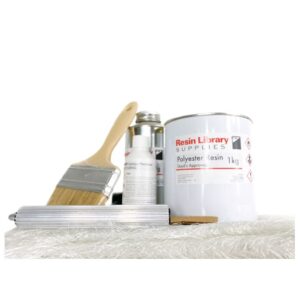
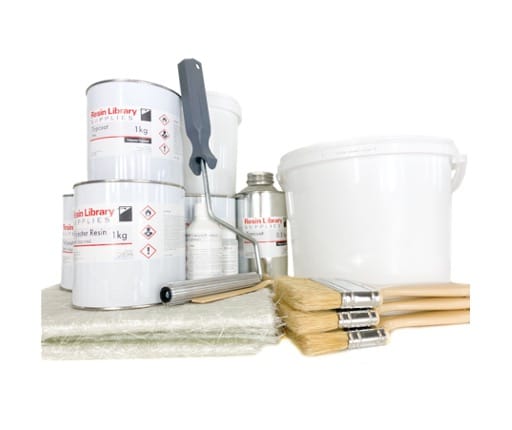
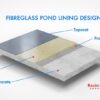
Every fibreglass pond kit is designed to give you the essential materials for a GRP lining:

  • Polyester resin – UV stable, WRAS compliant, and ISO9001 manufactured.
  • MEKP catalyst – supplied in the correct amount for curing.
  • 600g fibreglass mats (chopped strand matting) – for reinforcement and waterproofing, ensuring strength and watertight sealing.
  • Surface tissue – smooths the finish and adds extra protection to the cured layers.
  • Resin topcoat – available in grey or black to complete the pond with a neat finish.

Optional tools and products can also be included to make installation easier.

Why Choose a Fibreglass Pond Kit?

Choosing a fibreglass pond kit from a trusted supplier has many benefits:

  • Durability – Once cured, fibreglass forms tough, seamless layers that will not leak.
  • Professional finish – Surface tissue and topcoat give a smooth lining in your chosen colour.
  • Trusted waterproofing – GRP is proven and safe once cured.
  • Easy to use – Supplied with all the essentials, each kit makes installation simple, even if you are unsure where to start.

We are passionate about producing high-quality fibreglass pond kits, and we strive for excellence in every item we supply.

Product Overview

Fibreglass (GRP) is a composite made from polyester resin and fibreglass mats. When mixed with a catalyst, the resin cures into a strong, lightweight, and seamless liner.

Using at least two layers of chopped strand matting, reinforced with surface tissue, the liner creates a barrier that keeps water in and contaminants out. A final topcoat is applied in your chosen colour to complete the installation.

Fibreglass pond liners may vary in size depending on raw materials and production processes.

Installation Tips & Preparation Guide

Installing a fibreglass pond is straightforward, but preparation is key:

  • Prepare the base – Ensure the pond surface is clean, dry, and free from debris. For concrete ponds, remove dust and apply a primer.
  • Apply primer – Strongly recommended to improve adhesion.
  • Mix resin and catalyst – Follow the instructions carefully to achieve the correct curing time.
  • Lay fibreglass mats – Apply 600g chopped strand in at least two layers for strength.
  • Add surface tissue – Smooths the finish and reinforces the cured layers.
  • Finish with topcoat – Apply in grey or black for a professional finish.

Note: Larger ponds may require two or more people for safe lifting and positioning.

Safety note: Always wear gloves, goggles, and a mask when handling resin and catalyst. Work in a well-ventilated area.

After installation, wait at least 48 hours before filling the pond with water to allow all materials to cure fully.

Fibreglass Pond Kits vs Other Liners

Compared to rubber or PVC liners, fibreglass pond kits offer:

  • Longer lifespan – GRP linings can last for decades.
  • Strength – Multiple layers of resin, matting, and tissue provide structural integrity.
  • Custom fit – Can be applied to ponds of all shapes and sizes, unlike pre-formed liners.
  • UV protection – The topcoat prevents fading and damage from sunlight.

Common Applications

Fibreglass pond kits are versatile and can be used for:

  • Small garden ponds – Easy to shape and line with GRP.
  • Koi or fish ponds – WRAS-compliant materials ensure a safe environment for aquatic life.
  • Water features – Suitable for fountains, streams, or decorative projects.
  • Refurbishment projects – Apply new layers to upgrade an existing fibreglass pond lining.

Maintenance & Aftercare

To keep your fibreglass pond looking its best:

  • Clean gently – Remove algae with non-abrasive methods.
  • Inspect layers – Check the topcoat annually for scratches or wear.
  • Avoid harsh chemicals – Use pond-safe treatments only.
  • Expect decades of use – With proper care, GRP pond linings can last a lifetime.

Environmental & Safety Information

  • Sustainable – Produced in ISO9001-compliant facilities with strict quality control.
  • WRAS compliant – Safe for fish, plants, and wildlife.
  • UV stable – Provides long-term protection against weathering and fading.
  • Safe handling – Kits include the correct amount of catalyst, with clear instructions.

All prices include VAT, and full details are provided on the invoice.

Final Thoughts

Order your Resin Library fibreglass pond kit today and enjoy a strong, durable, and eco-friendly solution for your pond project — backed by our commitment to quality products and professional results that last for decades.

FAQs

How long does it take to install a fibreglass pond kit?
Most installations can be completed in a day, though curing time depends on temperature and catalyst levels.

How many layers are required?
Most projects require at least two layers of 600g chopped strand matting, plus surface tissue and topcoat.

Can I install on a concrete pond?
Yes – GRP adheres well to concrete when the surface is prepared and a primer is used.

What colours are available?
Kits come with a grey or black topcoat, giving you a choice of colours.

Is the resin safe for aquatic life?
Yes – once fully cured, the WRAS-compliant polyester resin is safe for fish and plants.

What delivery options are available, and how long do they take?
We offer several options, including standard and express delivery. Estimated times vary by location, but most orders are delivered within 3–5 working days. All fibreglass pond kits are securely packaged, and tracking details will be sent once your order is dispatched.

How do I order a fibreglass pond kit?
Simply select your size and add it to your basket. During checkout, you can include special instructions, such as bulk delivery for larger quantities, or specific requirements. If you are unsure which option to choose, our team will help you find the right one.

Applications

Downloads

Getting Started

Fibreglass pond liners are a great way to waterproof your pond. If you’re new to fibreglassing, you might want to read on. Whilst fibreglass creates an excellent barrier to waterproof your pond, the techniques involved do require a bit of skill, so be sure to read on. It’s also worth checking out our Frequently Asked Questions (FAQs), Troubleshooting section and our guides and videos.

Q. How good are fibreglass pond liners?

A. Fibreglass (GRP) pond liners are probably the most reliable waterproofing system for ponds. When installed correctly, you can expect many years of waterproofing. Indeed, fibreglass has multi-decade waterproofing and excellent mechanical properties, making it durable, abrasion resistant and relatively lightweight and cost-effective in water-based applications

Q. What materials and tools do I need to for a fibreglass pond lining?

A. Generally, a fibreglass pond liner can be constructed with these materials: polyester resin, topcoat resin, MEKP catalyst, glass fibre matting and surface tissue. Tools required include brushes, polyester rollers (for larger areas) and paddle rollers. Resin Library supplies the tools and materials needed to create a fibreglass pond lining with for every kit size.

Q. How do I coat a pond with fibreglass?

A. (1) Create a surface amenable to pond adhesion – see our guide on this, (2) apply a resin primer, (3) apply fibreglass laminate and allow to cure (full cure = 24 hours), (4) apply topcoat and (5) allow to cure (full cure = 24 hours) and rinse down prior to adding water. A more detailed guide is available in the Downloads section of our Fibreglass Pond Kit product page.

Q. How much does a fibreglass pond kit cost?

A. Fibreglass pond kits start at under £100 for smaller sizes and increase with kit size. 

Q. Where can I get advice on how to install a fibreglass pond liner?

A. Resin Library offers product-specific guidance in both written and video formats on how to install fibreglass pond linings. We also offer technical support via phone and email if needed.

Q. How does a fibreglass pond lining work?

A. Fibreglass is very waterproof – it repels water – particularly when a resin topcoat is applied. This means that water can be contained inside the pond for extended periods (many years, even decades) without allowing external contaminants to enter.

Q. What is a pond?

A. Ponds are temporary or permanent water features that have a surface area between 1 m2 and 2 ha (20,000 m2), and may be artificial or natural in origin.

Troubleshooting

This refers to the construction of fibreglass pond coating on the internal surface of a concrete or equivalent pond. You can purchase your own fibreglass pond kit in a range of sizes.

A step-by-step video guide on how to create a pond lining is available.

Problem: my laminate is not sticking to the concrete

Cause: poor laminate adhesion to concrete could be one or more of the following:

  • Poor quality laminate preparation evidence of incorrect laminate leading to poor bonding is air pockets/white patches, exposed fibres and uneven bonding to the surface
  • Absence of primer: fibreglass laminate like other resin-based surface coating systems requires a resin-based primer to promote adhesion 
  • Insufficient concrete preparation/condition:
    • Damp or moist concrete – water molecules limit curing and bonding. It should be dried out in advance.
    • Greasy, dusty or dirty concrete – contaminants limit curing and bonding and should be removed in advance 
    • Poor concrete condition: too many cracks or holes – concrete should
    • Be repaired prior to a fibreglass lining 
    • Very smooth concrete; laminate requires a mildly roughened surface to maximise bonding and adhesion. Re-apply laminate after abrasive treatment 

Note: for guidance, please refer to our instructions on how to laminate onto a concrete pond base

Problem: Sharp edges are puncturing the laminate

Cause: insufficient surface preparation

  • Pond linings require an absence of sharp edges
  • Remove laminate and use an abrasive tool to sand down
  • Apply laminate to smooth edges and sections 

Problem: the laminate or topcoat is still wet after 24 hours

Cause: insufficient resin usage and/or mixing

  • Indicates the resin has not cured. This could be due to:
    • (1) insufficient curing time, which could be caused by low temperature application (under 10 oC) 
    • (2) insufficient catalyst concentration – low concentrations of catalyst (or an absence of catalyst) will lead to a insufficient curing. MEKP catalyst should be added in a 1 – 4 % volume to weight ratio. Please refer instructions for specific guidance.

Problem: What kind of preparation work do I need to do to an existing fibreglass pond lining?

Solution: re-lining a pond is dependent on the condition of the existing fibreglass lining

  • Remove water and dry out the pond
  • Identify sources of moisture and block contact with the pond 
  • Inspect the condition of the pond. If cracks are present implement a concrete repair strategy
  • There are generally two options:
    • (1) If there is no damage to the existing topcoat (except for some general wear and tear, you could simply re-apply a new layer of topcoat
    • (2) If the fibreglass lining is quite old, it might be easier to apply a new layer of laminate. If so, remove loose sections of the existing lining manually where possible. Otherwise, apply a jet washer and or sand blaster – you want to create a consistent surface. Dry and remove dust/debris. Wipe down with an acetone-soaked cloth and apply a layer of resin primer. You can now apply laminate and topcoat. 

Problem: Do I need a primer for my fibreglass pond?

Solution: Yes, a resin primer is recommended to (1) improve laminate adhesion to the substrate, (2) block and mitigate the effects of any moisture present and (3) block external contaminants entering the pond water

Problem: How much resin primer do I need for my pond?

Solution:

  • Aim for 0.5 kg of primer per square meter
  • Expect to use more if the concrete is tougher or more porous 
  • A thin layer of resin primer should be achieved

Problem: How soon after applying primer should I apply the laminate?

Solution: 30 to 60 minutes. The resin primer should be mildly sticky at this point. 

Problem: What thickness of the laminate is needed for a fibreglass pond?

Solution:

  • 600 gram glass fibre chopped strand matting is industry standard.
  • Two layers may be preferred for a more robust finish but will not impact the overall lifetime of the pond

Problem: My pond is leaking after fibreglassing the inside surface

Cause: insufficient laminating practices and/or inadequate surface preparation

  • This indicates a failure of the inner fibreglass lining 
  • Identify the external location and size of the leak
  • Consider transferring contents (e.g. fish) to a safe storage container 
  • Drain the pond of water and inspect the inner laminate
  • Stop the source of the leak and allow concrete to dry out
  • Evaluate the condition of the fibreglass. You have two options: (1) repair damaged region(s) with a fibreglass repair kit and re-apply topcoat resin over damaged areas or (2) re-install a new fibreglass pond lining by resurfacing the existing lining.

Videos

Fibreglass Pond Kits

Ideal for waterproofing concrete, mortar and other pond base structures

Video Guide

The video below shows the steps outlined in building a fibreglass pond. Starting with a dry concrete base, the video shows the application of primer, fibreglass laminate and topcoat. More detail is available in the Downloads tab, including a more detailed step-by-step guide.

How to Use Surface Tissue

Why Build a Pond?

In addition to looking great and adding a more interesting perspective to your garden, ponds are a great way to promote biodiversity – the richness of species in our environment.
According to the World Wildlife Federation (WWF), “Biodiversity is all the different kinds of life you’ll find in one area—the variety of animals, plants, fungi, and even microorganisms like bacteria that make up our natural world. Each of these species and organisms work together in ecosystems, like an intricate web, to maintain balance and support life. Biodiversity supports everything in nature that we need to survive: food, clean water, medicine, and shelter.

Even small ponds encourage birds and other creatures – important for biodiversity. According to the Natural History Museum, “Cities and towns have a smoothing effect on biodiversity, tending to favour generalist species like feral pigeons. Those that require a particular habitat, or are intolerant of disturbance or pollution, often can’t survive. This is called biotic homogenization.”

Ponds are also compatible with Sustainable Urban Drainage (SUDS), treat stormwater pollutants, attenuate runoff, and promote biodiversity and amenity wherever possible. Their features mimic ecological systems as well as creating space for biodiversity to flourish.

Another reason to install a pond centres on the habitat benefits. The ‘Willingness to Pay‘ metric for habitat benefits is as high as £25 per person according to a study into the benefits of SUDS ponds. In this same study, the Royal Botanic Gardens placed a value of £15 per person, highlighting how ponds generate favorable feelings among persons inside a 500 m radius of a pond.

Specification

Resin Library Fibreglass Pond Lining (1 layer of 600 gram CSM) has been independently tested for its mechanical and physical properties.

The specification document is available in the Downloads tab on this page. The following provides a summary of the results obtained.

PropertyValueTest
Expected laminate thickness1.20 ± 0.15 mm-
Weight per area1.9 ± kg/m2-
Hardness86.2 ± 1.4 (n=5)ISO868
Density1.44 ± 0.01 kg/m3 ISO1183-1
Tensile strength81.9 ± 8.5 MPaASTM D3039
Tensile modulus6552 ± 819 MPaASTM D3039
Flexural strength183.6 ± 26.8 MPaASTM D7264
Flexural modulus5364 ± 507 MPaASTM D7264

Test details are available for hardness (ISO868), density test (ISO1183-1), tensile properties (ASTM D3039), flexural properties ((ASTM D7264)

Note: results were obtained under independent laboratory conditions. Results are not necessarily reflective of what will be achieved for your installation. This data is for general, informational purposes only. Resin Library is not liable for any outcomes.

What Can I Expect?

Fibreglass is a best-in-class pond lining system. In addition to providing robust waterproofing, it is also mechanically strong, abrasion- and impact-resistant.

Using Resin Library’s standard grey flowcoat, the finished pond will resemble slate, making it blend in with any garden. There are other options available, like a black flowcoat.

To achieve the best finish, we urge prospective users to consider our written and video guides.

A critical feature in any waterproof lining system is the preparative work – particularly for the base substrate, along with the laminating techniques and flowcoat application.

The pond itself should last many years. You can expect fish and other lifeforms to thrive in and around it, ultimately creating a new ecosystem.

Sustainability

Fibreglass pond liners are extremely sustainable waterproofing solutions due to their durability, eco-friendly properties, and long-term performance. Their exceptional strength and resistance to wear, weathering, and chemical degradation, ensure a very long lifespan that does not require for a long time, thereby reducing material demands and lowering the carbon footprint of your pond.

Unlike some plastic or rubber liners, (e.g., EPDM) that may break down or leach harmful substances into the environment, fibreglass is inert and stable, minimizing ecological effects.

Additional information

Size

2 m2, 3 m2, 5 m2, 10 m2, 15 m2, 20 m2, 25 m2, 30 m2, 35 m2

Colour

Black, Grey

You might also be interested in