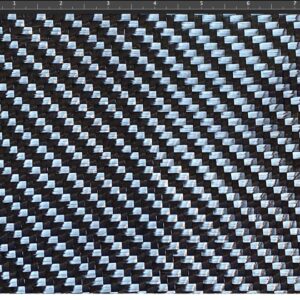
Carbon Fibre Kit For 3D Printed Moulds

Entry-level carbon fibre kit for the fabrication of parts from 3D printed moulds.

Each kit comes with the necessary materials and tools needed to make. The epoxy resin used here has been chemically engineered for use in hand laminating practices. 

If you’re looking for a quick turnaround on a carbon fibre part, this kit is for you.

This product is currently out of stock and unavailable.

Send to a Friend

Description

Easy to use carbon fibre laminating kit designed to make parts from 3D printed moulds. Includes an epoxy resin system with carbon fibre reinforcement to help generate high-quality composites.

Save time by rapidly building carbon fibre prototypes from computer-designed moulds. 

Applications

This carbon fibre laminating kit is intended for the fabrication of carbon fibre parts from 3D-printed moulds.

This kit is intended for all users, from entry level through to experienced and can be used to experiment with the fabrication of carbon fibre parts from a 3D-printed mould.

Recommended applications include:

+ Fabricate carbon fibre parts from 3D-printed moulds at a low cost with a rapid turnaround

+ Create prototype parts to allow evaluation prior to larger-scale manufacturing

Downloads

Carbon Fibre 3D Printed Mould Laminating Kit Manual_1.4

TDS EP 5752

TDS EP 5752 – H105

sds h5752

Getting Started

What can I expect?

Carbon fibre composites require a degree of skill and understanding – especially when dealing with 3D printed parts for the first time. 

Generally, we find that a higher level of planning, preparation and practice generates better results. This kit is a balance between experimental testing, fast prototype turnaround times and when performed correctly, viable carbon fibre parts. 

Carbon fibre demonstrates exceptional mechanical properties – namely a high strength-to-weight ratio coupled with a seamless and mouldable finish.

Note: this kit includes the materials used to make a carbon fibre part from a pre-existing 3D printed mould. It does not include the materials needed to make the mould. 

We highly recommend users read and where possible watch videos on how to create a carbon fibre composite using hand lay-up techniques.  

Resin library also provides a series of Frequently Asked Questions (FAQs) to address some of the most common concerns as well as a Troubleshooting section to help problem solve any ongoing issues. We advise prospective users to read these in advance.

Learn More About 3D Printed Parts

3D printers offer a way to convert computationally designed objects into real-world parts. 

Pioneered in the 1980s by Dr Kodama, many examples focussed on the creation of a 3D part using a photosensitive resin. This has changed dramatically over the past few decades. 

Defined as additive manufacturing, 3D printing refers to the construction a three-dimensional object from a CAD (computer-aided design) software model. It is flexible in both the design, material usage and method of manufacture. It has given rise to a range of new products with significant improvements, ranging from orthopaedics to car manufacturing

3D printed parts have emerged as an industrial and more recently domestic means to produce seamless parts in an automated manner. However, the materials used to create the parts (e.g., PETG) lack the high-performance mechanical properties for many applications – unless high-end materials and equipment are used – usually at a significant cost. 

In the context of composites like carbon fibre, they bypass the need to create a plug (the part the mould is initially built around), since the mould itself can be 3D printed into the desired shape. Indeed, 3D printers offer the chance to create a moulding platform to support composite layup, thereby enabling rapid prototyping with a reduced number of components. 

This means that carbon fibre can be laid by hand to the 3D-printed mould. Upon curing, it can be released and with some finishing will create a carbon fibre part.

Of the three main types of carbon fibre laminating, wet lay-up, prepreg and resin transfer moulding, this method is the most cost-effective and requires no additional equipment, making it ideal for fast prototyping and rapid generation.

More detailed instructions are available in our product guides (see the Downloads tab). 

Innovation Centres & Expertise

Additive manufacturing in the UK is led by industry, academia and institutions such as the High-Value Manufacturing Catapult.

Apprenticeship schemes in additive manufacturing are also available.

Internationally, MIT (Massachusetts Institute of Technology) is a leader in additive manufacturing, with a range of educational courses. It is driven by experts such as John Hart, a professor of mechanical engineering.

Additional information

Size

Standard