


This article provides an overview of layup methods for fibreglass composites, linings and coatings.
Fibreglass Laminates
Fibreglass laminates have revolutionised a huge range of industries and sectors, providing enhanced performance and structural strength without adding additional weight.
Easy to use, they can be moulded and applied to a variety of surfaces, creating seamless, all-in-one shapes and sizes (difficult to achieve with metals and wood) that are incredibly strong and lightweight. And those traditional materials are also susceptible to rusting and have either limited strength or excessive weight in the case of steel.
 Fibreglass Kits
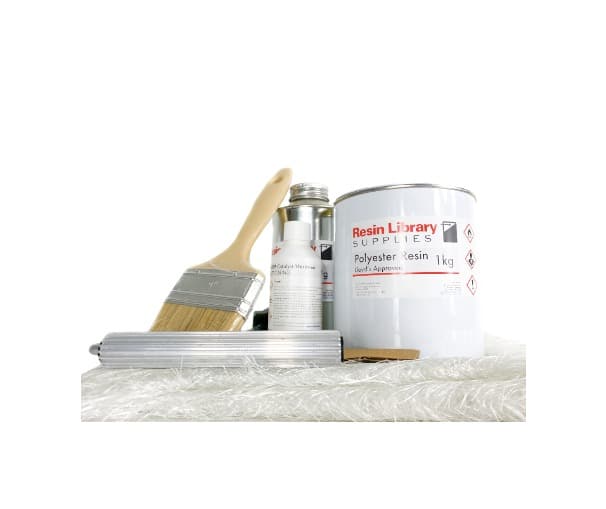
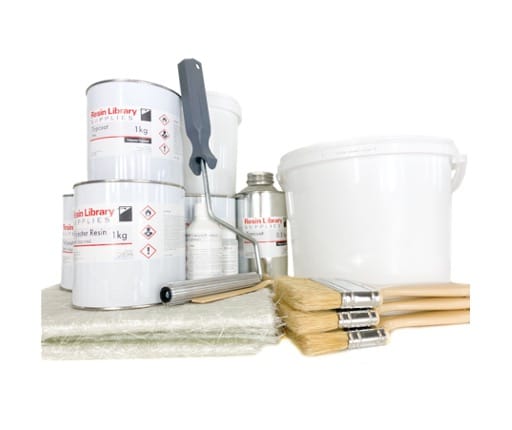


Fibreglass (GRP) Flat Roof Repair Kit
£24.00 - £128.00£88.00 - £1039.00£39.99 - £202.00£54.00 - £270.00A combination of both fibre-based structural backing and flexible, seamless resin that hardens once dry, composites are used in a variety of aerospace, space, automotive, construction and marine industries.

Benefits of Fibreglass Composites
They provide unique and valuable benefits, from high strength-to-weight ratios, relatively low cost, durability, chemical, water and abrasion resistance all in one.
A range of composites exists, from carbon fibre-based composites to fibreglass ones. A major benefit is the ability to adjust the ingredients and ingredient ratios according to the application. Need additional flexibility? Add more resin and perhaps use a thinner fibre backing. Need more strength and rigidity? Add more fibre and reduce the amount of resin.
The properties of composites are customisable according to their environments.
Glass-reinforced composites (also known as fibreglass and glass reinforced polyester – GRP) are a subset of composites popular with engineers as a replacement for materials like steel, which are heavy and subject to corrosion. With a wide range of applications, fibreglass is a type of composite material that can be used to create boats, surfboards, vehicles, flat roofs, gutter linings and many other structures.
Fibreglassing techniques
Before detailing two of the most common fibreglass lay-up techniques, it is worth detailing some of the factors influential in their creation. The mechanical properties and performances are highly dependent on composite production conditions under which they are produced, from hand lay-up to vacuum bagging. A key area of this is quality control. The structure of fibreglass laminates – or rather GRP lining is produced almost immediately upon application since the resin begins to cure and subsequently harden. For the most part, larger surface areas – like larger structures such as yachts, demonstrate a wider variation in their properties.
For the most part, the parameters most laminators should be aware of are typically seen as lay-up sequence and fibre orientation.
According to one study which looked at the effect of fibre orientation, the continuous glass fibres increase the impact strength by 17 %–24% compared with samples with randomly orientated glass fibres. Elsewhere, fibre orientation influences tensile strength and flexural properties.
An increase in fibre thickness caused an increase in flexural strength for 20-, 25-, 30-micron diameter fibres, but not for 45-micron fibres. Longer glass fibres also improve composite mechanical properties.
The volume fraction of fibre in the composite is an important parameter and it is calculated accordingly
where, Vfibre = volume of glass fibre, Mf = Mass of glass fibre, ρf = Density of glass fibre.
- Void or porosity
- The extent of laminate consolidation
- Level of curing
Each of these parameters can influence the over quality of the laminate, from thickness to uniformity, adhesion to the underlying structure, waterproofing, chemical resistance, abrasion resistance and overall durability and longevity. This is why the overall effectiveness of quality control during laminating and the ability to minimise variation and adhere to strict manufacturing principles is so important since this impacts the structural characteristics of the laminate.

Whilst quality control methods typically seen in the space industry may not be as easy to achieve due to economic reasons, laminators should be aware of the most influential parameters:
Ingredients
- Glass fibre mat – typically 450 or 600 gram CSM
- Polyester resin
- Polyester resin topcoat
- Catalyst
- Acetone
What is quality control during laminating?
Quality control during laminating refers to a system of standards that are maintained and obeyed during the production of composites, linings or coatings, whereby a sample of the produced material is tested against pre-defined criteria to assess compatibility. In certain instances, a quality control ISO9001 standard may be created.
Types of lay-up strategies for laminators
This section discusses the following types of Fibreglass (GRP) lay-up methods. These centre on spray lay-up and hand lay-up.
Universal standards exist detailing the creation of fibre-reinforced plastics, exist to provide installers and laminators with industry-recognised requirements.
Hand Lay-up
Hand lay-up methods of fibreglassing offer a convenient, low barrier entry point in the creation of a fibreglass composite. In general, dry reinforcement glass fibers (woven, knitted, stitched, or bond fabrics) are cut to size and positioned inside a mould. Catalysed polyester resin is applied using a brush and/or roller to create a fibreglass laminate. A topcoat (flowcoat) is then applied for aesthetic purposes and enhanced laminate protection.
Handl layup methods of fibreglassing are commonly used to create GRP flat roofs, apply linings to ponds and water features and on more general applications like concrete and timber waterproofing and protection. The same method is also used to create carbon fibre and other composite-like structures.
Advantages
- Very little up-front investment beyond materials and basic tools
- Very effective for composite structures – excellent performance can be achieved
- Able to exploit the full strength of the fibre-based composite, since the full length of the fibre can be utilised
Disadvantages
- Slow process – hand-applied lay-up methods are time-consuming. A single skilled applicator could cover an area of around 100 square meters in one day
- Very dependent on the skill of the applicator and the quality of laminate is somewhat difficult to determine
- Controlling fibre volume fraction is difficult to do
Materials
A similar set of materials is needed for a hand lay-up GRP composite or lining.

Glass fibre
There are several types of fibres used in hand lay-up methods. These range from thinner fibre sheets – commonly referred to as chopped strand mat (CSM), which is 300 to 600 grams per square meter to thicker ones. These are woven-roving fibres that combine a chopped strand mat and a woven fibre roving (450 to 900 grams per square meter).
Glass Fibre CSM
Glass fibre chopped strand matting (CSM) is a commonly used reinforcement material for fibreglass laminating.


Resins
Polyester resin is the most commonly used type for laminating. Other types may also be used such as epoxy and vinyl-based resins. The type of polyester resin utilised is project dependent, with a range of types being available, from bisphenolic to isophthalic and orthophthalic.
Polyester Resin
Lloyd's Approved polyester laminating resin. Suitable for a broad range of fibreglassing layup applications.
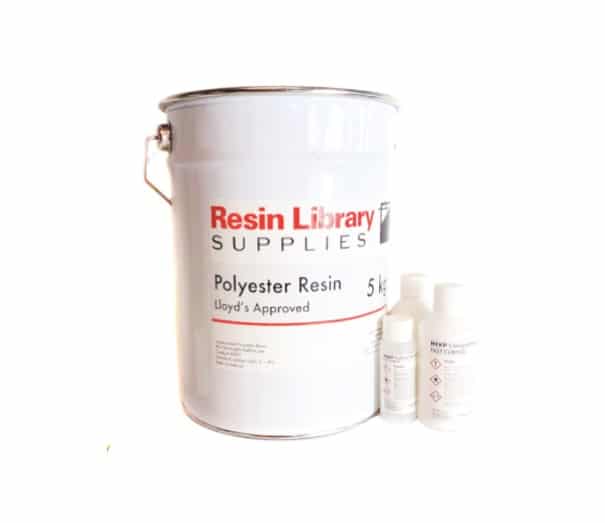
Epoxy resins are preferable when higher temperatures are needed with more rigidity, but they are more expensive than polyesters. Indeed, polyesters are preferable for wet lay-up fibreglass-based components, offering all-round performance, from chemical resistance to a high strength-to-weight ratio.
Polyester resins are often transported and stored in a liquid form, combining resin and styrene. The amount of styrene, a monomer, dictates the resin viscosity.
Calculating the Quantity of Polyester Resin Required
There are several ways to determine the resin content for a composite For the most part, this should be determined based upon the manufacturer’s instructions, although it may also be determined by the following formula used in the ISO-1268-2 standard:
Mresin = Mglass x ( ( 100 – Mglass – Wglass ) / Wglass ) x K
, where:
- Mglass = mass of glass (grams)
- Mresin = mass of resin needed (grams)
- Wglass = content of glass fibre required in the laminate as a percentage of the total mass
- K = constant representing 20% of resin lost via spills and by absorption of rollers
Mresin = Mglass x ((100 – Mglass – Wglass)/Wglass) x K
Additives: resin curing requires the use of a catalyst – typically peroxide methylethylketone, an accelerator (e.g cobalt octoate) and an inhibitor (hydroquinone). The catalyst induces resin cross-linking and subsequent hardening. the inhibitor is used to slow the curing time – a feature particularly useful for larger projects. Flame retardants are included in the resin blend when the internal components are flammable and toxic fumes and flame spread are an issue. UV-resistant ingredients can be added to the resin to prevent solar-induced degradation in outdoor applications.
Fibreglassing Tools
A range of different tools are needed to cut glass fibre mat, apply the polyester resin to the glass fibre mat and cover with a resin topcoat. Sheep’s wool or synthetic rollers are sometimes too large for certain areas requring resin application, so paint brushes are instead used.

Calculating the Quantity of MEKP Catalyst Required
The equation used to calculate the amount of catalyst (MEKP) to add to the polyester resin.
Mcatalyst = %catalyst x Mresin
, where Mcatalyst = mass of catalyst (grams), Mresin = mass resin being used (grams), %catalyst (%)
An example may be given as follows. If the manufacturer recommends a 1 – 3 % amount of catalyst to add to resin and you are working with 10 kg of resin, you might want to use 2% to be in the middle. As such:
Mcatalyst = (2/100) x 10 = 0.2 kg = 200 grams of catalyst to add to every 10 kg of resin.
Mould release agents: the overall composite structure relies upon the mould for shaping prior to curing, but after curing the composite needs to be released. Given that fibreglass laminates have high levels of adhesion, a release agent is required prior to curing.
Method of application
Hand lay-up methods of fibreglassing require a level of skill and care in order to create a reliable substrate. To assist in the creation of a fibreglass-based composite,
Lamination
Prior to laminating the mould, the mould itself should be adequately cleaned with a solvent (typically acetone) and a dry, clean cloth.
Apply a thin layer of release agent onto the mould surface.
Dispense 1.5 kg of resin into a clean mixing container and add 0.5 g of catalyst according to the manufacturer’s instructions. Mix well using a clean paddle, taking care to avoid the introduction of bubbles into the mixture.
Take a roller and dip it into the resin-catalyst mixture. Apply a thin layer of resin to the mould and follow up by placing C-glass fibre mat into the resin. Then use a steel roller to gently apply pressure to the glass fibre mat, driving out excess resin and ensuring it is saturated in the resin.
Repeat the process using 300 and 450 chopped strand glass fibre mat until the desired thickness of laminate is achieved based upon the previous equation. Apply a final outer layer of C-glass on top of the layers of 300 and 450 CSM. Detail on the effect of different glass fibre thicknesses can also affect composite performance, as well as that of ingredients added into the laminate.

Then add a mixture of 500 g of resin, 0.2 g of catalyst and 2 drops of wax-in-styrene to all areas of the laminate.
Then apply uniform pressure to the laminate by carefully placing a weight on top. This is to ensure that the laminate cures in a uniform and consistent manner. Cure at room temperature or in a drying oven, depending on requirements until the resin has hardened.
Variations on Hand Layup
Variations/adaptions of hand layup methods are detailed as follows:
- Vacuum bag moulding: uses a bag clamped over the mould whereby vacuum is created between the mould and the bag. this drives the resin into the empty pockets of reinforcement, removing trapped air. Curing is often heat-induced inside an oven.
- Pressure bag moulding: is similar to vacuum bag moulding, with the exception that pressure is applied above the bag. This is preferrable for thicker components.
- Hand lay-up using SMC is a heat-cured method
Spray lay-up
Where Are Spray Lay-up Methods Used?
Spray-based lay-up methods for composites are commonly used in aerospace and other large industries like yacht building, space (rocket construction, NASA spacecraft) and several others – ones that require few joints and an overall seamless unibody. The benefits of a spray-based system are due to…
Method of application
The spray lay-up methods involve the application of resin and chopped fibres to a designated surface. Commonly used for composite moulds on an industrial scale, it is ideal for larger applications. Here, the spray gun is filled with a mixture of fibres and resin and directed at the mould and sprayed until the surface is saturated with a thin layer. The surface is then held under low-humidity conditions at room temperature for several hours until the resin has cured. A paddle roller or other instrument may be used to drive out remaining air bubbles and ensure fibre saturation. As well as the effectiveness of air bubble removal, the mechanical features of the resultant surface also depend upon the type of resin used, the type of fibre and the mixing ratios.
Advantages
- Fast, efficient application independent of scale
- Ability to accurately control the ratios of catalyst to resin and resin to catalyst
- Spray guns are competitively priced – a low barrier to entry
Disadvantages
- The strength of a laminate is due to the long (several centimetres) length of fibres. Spray guns using pre-mixed fibres and resin are restricted to very short fibres; the mechanical strength of the fibre can be compromised.
- Resins used in guns need to be of low viscosity to avoid blocking the nozzle, such that they contain a higher proportion of solvents. Different temperature conditions can interfere with curing – particularly when solvents have been added.
- Resins used in composite fabrication, along with any solvents and catalyst, will be more dispersed in the atmosphere when sprayed. Therefore, spray-based methods of application require well-ventilated areas and those in the vicinity require the use of PPE (personal protective equipment).
What factors affect fibreglass (GRP) performance?
Regardless of the method used to produce a fibreglass composite, it is almost impossible to create a composite free of defects. Thus, one metric useful in evaluating manufacturing methods would be to compare the quantity and type of defects generated. More detail on quality control pertaining to laminated composites should be sought.
Irrespective of the method sought, there are several factors which affect the performance of a GRP composite, lining or coating:
- Increasing thicknesses – in one instance from 4 to 6 mm resulted in a decrease in GRP-composite pipe failure from 10% to 0.3%. A reported downside to this was an increased coefficient of variance – an indicator of composite variation.
- Moisture content of the surrounding atmosphere
- The moisture content of resin and subsequent laminate
- Surface contamination of composites: the presence of dust, debris and other contaminants can severely compromise the quality and integrity of composites. This can affect their adhesive bond right through to their structural integrity.
- Air pockets
- Catalyst ratio: typically a 1-3 % volume or catalyst per volume of resin is recommended for most fibreglass structures. Should insufficient resin be used (<1% or not at all), the polyester resin will not cure sufficiently, rendering the structure soft and tacky. On the other hand, too much catalyst may lead to ineffective curing.
- Too much solvent: acetone can sometimes be added to the resin to make it more workable (less viscous) in colder climates.
Problems With Fibreglass Laminates
Common faults associated with fibreglass laminates are possible. Even if the correct procedures have been followed, some faults may be present. These are described below:
- Wrinkles: inadequate curing, gelcoat is too thin, catalyst contaminated, solvent exposure
- Porosity (indicated via pinholes and therefore entrapped air):
- Pinholes: This could mean the gelcoat is too thick, too cold and/or has been poorly mixed.
- Film voids: wrong catalyst, inadequate spraying technique or spray gun, moisture presence.
- Peeling of gelcoat: impurity contamination, gelcoat cured too quickly – or too slowly, excessive wax release, dry reinforcement materials
- Pre-release: uneven gelcoat curing, too much curing, catalyst level too high, styrene content too high, wrong mould release device, elevated temperatures from fast laminate cure, mould movement
- De-wetting: gelcoat too thin, low viscosity of resin, contamination (water, grease/oil, silicone)
- Pock marks: gelcoat contamination, impurity presence on surface, excessive spraying, dry laminate, air voids in laminate.
- Colour separation: dirty equipment, contamination, inadequate mixing, sagging/drainage due to uneven angle, inadequate gelcoat application, gelcoat dilution, unsuitable pigments.
- Colour tear: resin-pigment separation, incorrect praying technique, excessive gel time, sagging.
- Colour specks: inadequate pigment mixing, contamination
- Dimples: excessive layers of uncured resin, insufficient laminate consolidation
- Sagging: Gelcoat too thick, gel time too long, temperature too high, resin too viscous, incorrect pigment paste, physical movement
- Dull surface:
- Upon mould release: wrong wax, wax accumulation, incorrect release wax, inadequate mould surface, polystyrene accumulation, impurities or moisture on mould, wet/rough PVA film
- Patched: water on mould or in gelcoat, uneven gelcoat, inadequate catalyst mixing, uneven wax application, insufficient mould gelcoat curing
- Post-release: sub-cured or low-curing gelcoat
- Chalking: insufficient curing, impurities on surface, incorrect pigment or too much of it, chemical exposure
- Fibre Pattern (transferred from mould): gelcoat too thin, reinforcement too close to mould surface, highly exothermic reaction in laminate, premature curing.release
- Cracking:
- Star cracks: reverse impact, gelcoat too thick, crack pattern from mould
- Parallel cracks: flex cracking, gelcoat too thick, poor mould release, laminate too thin or too flexible
- Crazing/small groups: chemical attack, exposure to hot water, incompatible liquid exposure
- Blisters:
- Upon release: air voids, catalyst not reacted with resin, contaminated with solvent
- In water: air voids, osmotic interaction
- Watermarking: thin, double-coated layers of gelcoat, two layers of mould gelcoat, exposure to solvent
-
Health, Safety and the Environment
Health and safety risks should be considered in advance. Standard projects centre on a method statement, risk assessment and COSHH form.
More detail on fibreglassing is available from the HSE in relation to plastics moulding.
The environment under which laminating is undertaken – everything from primer application to topcoat curing – is an important part of the overall quality of the resultant structure.
Whilst aerospace industry composites have one standard for laminating – often to tolerate extreme conditions observed during flight, laminators in industrial and construction-led sectors have another that is often less stringent due to less demanding environments.