
Calculators Learn more

Fibreglass (GRP) Flat Roof Repair Kit

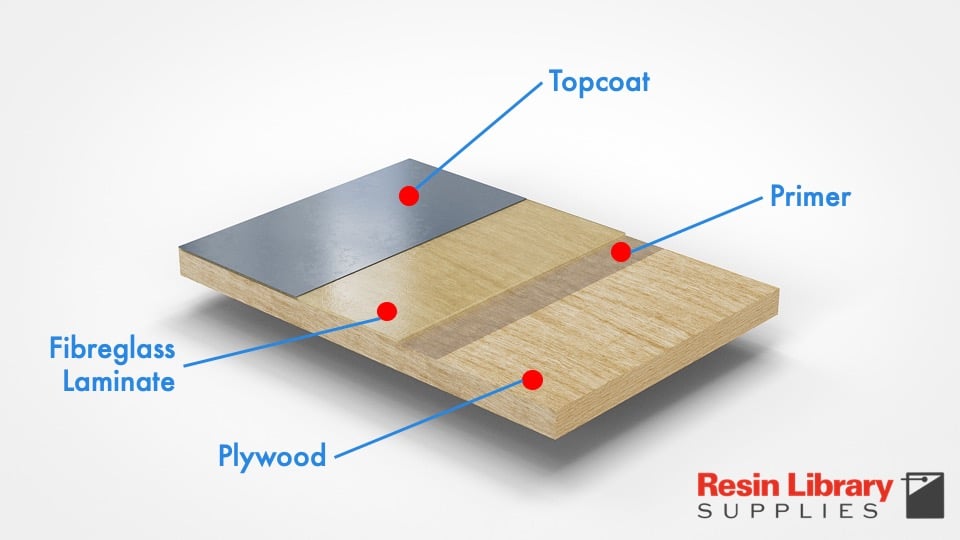
Fibreglass is an excellent flat roofing material that has established itself as a robust and reliable option over several decades. As a composite – a blend of polyester resin and glass fibre chopped strand matting – it enables the creation of a strong, lightweight and seamless waterproof and chemically resistant barrier. Notably better performing and safer to install than other membranes, like rubber and felt, it is a preferred option for many users.

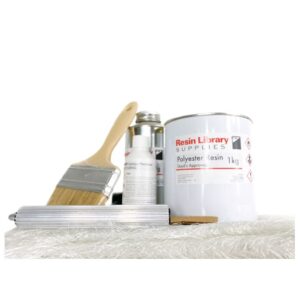
Each kit comes with the necessary materials and tools (optional) needed to build a fibreglass flat roof.

Price range: £54.00 through £270.00

Send to a Friend

Description

Resin Library’s fibreglass (GRP) flat roof repair kits are available in a range of sizes.

Each kit size can be selected from the dropdown menu.

UV stable and manufactured in an ISO9001 compliant facility, the polyester resin is a reliable, proven brand suitable for both indoor and outdoor applications. Our polyester resin is also Lloyd’s approved and WRAS compliant.

Note: ensure the surfaces are compatible, clean, dry and free from contaminants for a good bond.

Polyester resin catalyst (MEKP) is included.

A resin primer (purchased separately) is strongly recommended to improve laminate adhesion and prevent external contaminants from entering the pond.

Product Description

Each kit uses provides the materials for a simple yet durable and highly fibreglass-based repair system.

Fibreglass is an excellent repair material.  As a composite, it blends polyester resin and glass fibre chopped strand matting to create a strong and durable material that is both seamless and watertight.

What is in the kit?

Key ingredients

Each kit comes with the necessary materials and tools (optional) needed to make a flat roof repair using fibreglass.

The polyester resin is UV stable, WRAS compliant and manufactured in an ISO9001 compliant facility. It is a reliable, proven brand suitable for both indoor and outdoor applications. The polyester resin is standard grey and offers an excellent finish. MEKP catalyst is required for resin curing and an appropriate quantity is supplied with each kit.

Applications

Fibreglass is an outstanding flat roofing system with excellent long-term durability. It adheres well to a range of substrates, from existing fibreglass to wood (e.g., timber decking and plywood) steel and concrete. This makes it an excellent flat roof repair system.

Take care to ensure that adequate surface preparation has been undertaken in advance. Certain substrates may be incompatible in their existing state and so a degree of preparation may be required to make the laminate adhere.

Recommended Repair Projects

Recommended flat roof repair projects centre on repairs to damaged regions of a roof. These include punctures from heavy impact, blistering, delamination and in some instances the repair of aged regions. The type of fibreglass roofing repair procedure could be part of an ‘overlay’ or ‘overdeck’ system, which can save money on a flat roofing refurbishment and avoid insulation and certain aspects of timber decking replacement.

Whilst this kit contains fibreglassing materials and tools, it can also be used for other substrates provided that adequate surface preparation has been performed; ideally, application to the following substrates is advised:

  • + OSB3 timber decking surface (to a clean, untreated surface)
  • + plywood (with surface abrasion and surface cleaning)
  • + existing fibreglass (with surface abrasion and surface cleaning (using an acetone wipe)

It is not advised for repairs where the fibreglass. is bonded to EPDM, PVC or any other rubber roofing membrane. Substrates should be dry and free from moisture.

In certain instances, the perimeter of the flat roof may be damaged and may be the source of the leak. In this case, lead flashing would be recommended.

Guides

Repairs to existing flat roofs and fibreglass work both require a degree of skill, competence and understanding. Please read our guides in advance to ensure a full understanding of your requirements. An assessment of the roofing structure, the extent of any water ingress and damage should be clear.

Users should ensure the existing surface and underlying structure has been dried out, is free from contaminants (dust, debris and grease) and is clean.

Our instructional step-by-step guides cover a wide range of topics and exist in both written and video formats on fibreglass repairs. Technical support is also available for more bespoke applications.

More specific information can be found in the Technical Datasheets for respective products, as well as on individual product pages for polyester resin, glass fibre matting and MEKP catalyst.

Key Processing Information

Fibreglass flat roofing kits should be stored in a cool, dry place away from sunlight.

Surface preparation is a critical step in creating a high-quality fibreglass laminate repair. Applicators should ensure the surface is suitable and has been sufficiently dried, cleaned and rendered to maximise adhesion.

A primer (optional) is recommended in certain repairs where ongoing damp or poor adhesion is expected.

Users should ensure the surrounding atmosphere and any surfaces the fibreglass laminate is applied to should be clean, dry and free of contaminants (dust, grease, moisture, debris, mould, etc.). More detailed instructions on how to repair a flat roof using fibreglass can be found in our step-by-step guide.

More specific product information can be found in the Technical Datasheets for each product, as well as on individual product pages for polyester resin, glass fibre matting, resin topcoat and MEKP catalyst.

  • Suitability: professional laminating, DIY and hobby usage
  • Safety Precautions
    • Wear PPE: gloves, goggles and if working with resin, a mask unless working in a well-ventilated area. Use protective gloves when handling.
    • Read the MSDS in advance, plan ahead.
  • Recommended working conditions: dry, ambient conditions (15 – 30 °C)
  • Can be used from 15 to 30°C provided the atmosphere and surfaces are dry
  • Resin-600 gram CSM ratio: prepare 1.5 – 1.7 kg of catalysed polyester resin prior to application.

Application

  • Measure dimensions of the area of the required repair in advance, taking care to ensure complete coverage. Cut glass fibre CSM to size using a stanley knife. Glass fibre should be 10% above the desired surface area to accommodate trimming and ensure complete coverage. If a patch repair is being made, a smaller layer of glass fibre should be applied on top immediately after laminating. The second layer is designed to add structural reinforcement.
  • Consult Part L of the Building Regulations for detail on repair requirements to ensure compliance with roofing work.

Storage

  • Unopened shelf-life 6 months.
  • Store at 2 – 20 oC in a clean, dark environment sealed inside an air-tight bag.
  • Avoid moisture and other contaminants (liquids and particulates).
  • Once opened, immediately seal after use. Use within 3 months

Safety

  • Utilise protective gloves to avoid splintering when handling.
  • Consider polyester resin safety recommendations when laminating.
  • Roofing work is dangerous and adequate planning and preparation should be performed in advance. Existing flat roofs may contain asbestos – particularly felt. Be sure to consult the HSE’s guidelines on roofing asbestos. According to the HSE, a risk assessment, method statement, and COSHH form should be completed in advance.

Quality

Resin Library’s Lloyd’s-approved polyester resin is manufactured in an ISO9001 compliant environment. It is used by leading fibreglass roofing brands and is a high-performance ingredient in many fibreglass applications.

Education

In addition to guides and articles available in Resin library’s Knowledge Centre.

Downloads

Specification

Specification document: Fibreglass roof repair kit

Installation Guides

Written installation guides on how to install a new fibreglass roof can be used to ensure best practices are followed when repairing or refurbishing an existing one.

1-5 Health and Safety in Fibreglass Roofing

2-5 Fibreglass Roofing – Edge Trim Installation

3-5 Fibreglass Roofing – Timber Decking & Insulation Installation

4-5 Fibreglass Roofing – Laminating

5-5 Fibreglass Roofing – Topcoat Application

Safety Data Sheets (SDS)

Polyester resin MSDS

MEKP

Topcoat

Acetone TDS & MSDS

Technical Data Sheet

Technical Data Sheet – Unsaturated polyester resin


FAQs

Q. Why is my flat roof leaking?

A. Below are 4 of the most common reasons your flat roof is leaking. These are not all attributable to the membrane itself:

  • + Blocked gutters: a primary cause of a leaking flat roof. Over time, leaves and debris block gutters, causing water to overflow into the adjacent roof – hence the leak. You’ll typically see this when it rains heavily as there will be water overflowing. As such, your best option is to clean the gutters and check if the leak continues.
  • + Detached lead flashing: lead flashing should protect the gap between the roofing membrane and the wall. However, it can peel away over time and/or if installed incorrectly. Applying a new lead flashing should stop the leak. 
  • + Failed flat roof membrane: if the flat roof membrane itself (be it felt, EPDM, GRP, bitmumen or PVC) fails in some way, then you should expect a leak. Classic causes of failure include punctures and tears (in the case of rubber roofs like EPDM and PVC) and UV-induced degradation (e.g. felt and bitumen) and poor installation (the case with any system).
  • + Incorrect specification: fibreglass roofs – like others – can be incorrectly designed even if they are correctly installed. Some of these issues are:
  • 1. No slope: leading to rainwater collecting on the roof surface and pooling. Whilst fibreglass can hold this water for decades, it can seep into the main roofing structure. A slope should be present to ensure rainwater drains away from the roof into an adjacent gutter. This can be achieved using firrings which are installed directly onto the timber joists.
  • 2. Incorrect fascia height: fascias provide protection around the perimeter of the roof. If they do not adequately cover the perimeter of the roof, they can expose the underlying structure to rainwater – particularly when there is wind.

Troubleshooting

Fibreglass roof installations – like other types – can present a range of problems if not applied correctly. Some of these are detailed below to help prevent and diagnose commonly encountered issues.

Problem: resin is not curing

Causes (cold temperature application): if applied in very cold conditions particularly lower than 5 degrees C, it is unlikely to achieve a suitable cure unless specialised additives are included in the mix and are often unavailable to non-professional laminators. The result is a very sticky soft laminate that will not resist water ingress and will need to be removed and redone. Laminating onto a frosted surface will also contribute to this effect.

Causes (warm temperature application): catalyst mixing and quantities will play a part in the curing or non-curing rates of fibreglass laminates. On a hot day (e.g., above 25 oC), use as little as 1 % catalyst, that’s 10 ml per kg of resin and on a cooler day (e.g., below 10 oC) use 2 % catalyst…that’s 20 ml per kg of resin. Too little or too much catalyst can cause problems with cure so try to work within the 1-3% band according to the temperature. The mixing procedure is also of great importance to achieve uniform distribution of the catalyst through the resin and flowcoat. Flow coat mix should be particularly thorough on account of its higher viscosity and resistance to mix. It is a good idea to add the catalyst into a bucket before the flow coat ensuring that it contacts the internal corners ready for mixing. 

Solution: if the resin is not curing, it is likely that the coating has failed. If it is the fibreglass laminate, then it should be removed. If it is the topcoat, it should be scaled back to expose the cured laminate and then re-applied. Re-apply in more appropriate temperatures (within the range of 10 – 25 oC).

Problem: laminate is sticky and has white patches.

Cause: laminating onto a wet roof deck or getting caught out by rain will also cause an under-cured membrane again undermining its waterproof qualities. Typical evidence of this is a sticky surface and multiple white patches.

Problem: water ponding

Cause: a not uncommon issue usually generated by inadequate falls to the roof whether undertaken onto an existing roof, an old existing joist structure or an Overdeck installation. 

Solution: in most cases, in order to eradicate this, the existing surface roof deck should be removed and new falls created on top of the joists before proceeding with the installation. This can sometimes be expensive and lead to other structural implications due to the change of threshold height to wall flashings, drainage pipes and door cills if on a patio area.

Problem: water ingress through a new installation

Cause: generally this will be the result of poor laminating procedures caused by inadequate knowledge of fibreglassing techniques by the installer. Insufficient resin applied to the mat reinforcement, inadequate rolling out of the laminate mixture to consolidate laminate, poor upstand detailing and corners all contribute to failure. A trained eye will be able to assess the quality of the installation as it proceeds and correct any defect accordingly. Quite often, an installer will mistakenly believe that the final flowcoat finish will make up for any defects. It does not and that final application will drain into the micro pinholes in the underlying laminate and allow water to seep through. Evidence of this will be pinholes in suspect areas. 

Solution: at this stage, the roof has failed and will either need re-application of the fibreglass membrane and topcoat. A full condition assessment of the underlying roofing structure is recommended to determine the extent of the damage. need professional follow-up procedure to correct.

Videos

The following video series is designed to outline the correct installation practices used to install a fibreglass (GRP) roof. These can be used to ensure you perform the correct procedures when repairing a flat roof.

Step 1. Health & Safety in Fibreglass Roofing

Step 2. Decking & Insulation

Step 3. Edge Trim Installation

Step 4. Installing Fibreglass Laminate

Step 5. Topcoat Application

Getting Started

Resin Library’s Fibreglass Roof Repair Kits are designed to address a range of fibreglass flat roofing issues. These include, but are not limited to, patch repairs from punctures to the refurbishment of existing roofs.

However, it is important to be aware of the following if you are relatively inexperienced:

1. Safety

Health and safety is a critical feature in the construction industry. Be sure to take adequate precautions to ensure your working environment is safe. 

Recommended PPE is detailed in the table below.

Safety ItemDescription
GogglesGlasses offering protection for eyes from hazardous liquids and objects
Dust maskProtection from inhaled particulates that may be made during work - particularly during preparation, such as grit blasting or sanding.
Chemical maskSpecialist mask designed to protect from the inhalation of hazardous chemicals. Usually used in enclosed or poorly ventilated spaces.
Nitrile glovesChemically resistant gloves offering short-term protection for users working with chemicals.
Gripper glovesThicker gloves worn when working with glass fibre matting.

2. Building Regulations 

Building regulations pertaining to flat roofing work should also be considered. 

Q. Do I need planning permission to repair my flat roof? 

A. According to the Planning Portal, “If you want to carry out repairs on or re-cover an existing pitched or flat roof you will not normally need to submit a building control application if:

  • Less than 25 per cent of the total ‘building envelope’ (walls, floor, roof, windows, door, roof windows and roof-lights) is affected; and
  • Less than 50 per cent of the roof is affected.”

Q. Where can I find out more about building regulations?

A. The Planning Portal provides key information in regards to re-roofing flat roofs and work to an existing roof. There is also guidance on new roof installations which might overlap with repairs. 

More detailed requirements are also available in Part L of the Building Regulations.

3. Locating the source(s)

The reason for a leaking roof might not be in the membrane itself. Common reasons include:

  • Poorly Installed Flat Roofing Membranes
  • Ageing Membranes
  • Damage to the Flat Roofing Material
  • Lack of Maintenance: Blocked Gutters
  • Soffit and Fascia Damage

4. Can my roof be repaired with fibreglass?

Fibreglass bonds directly to timber, but requires a primer for plywood, existing fibreglass, lead and concrete. Adequate surface preparation should be performed.

Fibreglass does not bond to EPDM or other rubber roofing systems. Please call us to discuss if you are uncertain.

Effective fibreglass repairs can only be made to surfaces that are sufficiently dry. The roofing sub-structure (insulation, decking, etc)  should be structurally sound and free from water ingress.

5. Additional Options

If your flat roof was recently installed and is already leaking, you should contact the original flat roof installer. Ideally, you should have a range of guarantees that cover the installation as well as the workmanship – the latter being via an insurance-backed guarantee. Failing that and assuming the original roofer is absent, you should contact a specialist with an excellent track record. You can, if possible, present a legal case against the original roofer. 

That said, if you are considering the use of a professional flat roofer, it is advisable to look for the following:

  • Accreditations: Safe Contractor, CHAS and other industry-recognized certifications demonstrate compliance with best practices in both roofing work and health and safety.
  • Reviews: reviews convey a level of feedback. Customers should be able to provide customers the opportunity to provide feedback about their work. Reviews on high-quality sites like TrustPilot are subject to more stringent checks than Google.
  • Guarantees: both professional roofing contractors should offer comprehensive guarantees – first and foremost being an insurance-backed guarantee.

Additional information

Size

1 m2, 2 m2, 3 m2, 5 m2, 10 m2